Want to be in the loop?
subscribe to
our notification
Business News
BANK GUARANTEES FOR PROPERTY MEANT TO SAFEGUARD BUYERS
Accordingly, in case property developers fail to hand over apartments to buyers following commitments, banks would be responsible for returning the buyers' money, in line with signed contracts.
The regulation was expected to protect the rights of home buyers, as well as contributing towards cleaning up the realty market.
According to Nguyen Manh Ha, Director of Housing and Real Estate Market Management Department, this would eliminate risks for home buyers, as their money would be guaranteed by banks, which would strengthen overall buyers' confidence.
Further economic expert Nguyen Tri Hieu said the regulation would stimulate home purchases and improve liquidity in the real estate market. Financial disputes arising when property developers failed to complete their obligations were also expected to be reduced.
Huynh Trung Minh from HDBank was quoted by Tri Thuc Tre (Young Intellectual) online newspaper as saying that bank guarantees reflected that the project met certain standards and development potentials. Therefore, home buyers could feel secure when spending money on guaranteed projects.
However, there were concerns that the regulation would increase property prices and cause disadvantages to small developers.
According to Le Hoang Chau, president of HCM City Real Estate Association, guarantee fees might be a factor to be calculated in property prices, which would push up selling prices.
Thus, it would be unreasonable to apply the regulation to all property developers, as guarantees for projects of prestige developers were, in fact, not necessary, Chau said. He added that, instead, buyers should be allowed to request a guarantee if they found it necessary.
While the regulation was expected to eliminate incompetent property developers and enhance market transparency, Nguyen Van Duc, the association's deputy president, worried that this regulation might burden small developers who could need to purchase less favourable guarantee fees, in comparison to large firms, or might face difficulties in negotiating with banks for guarantees.
Further, some voiced concerns that this would undermine their competitiveness and even force them to leave the market.
However, no guarantee fees have been disclosed, as the fees should be competitive, several banks said.
Detailed instructions
While several developers were taking pioneering steps in signing agreements with commercial banks to guarantee their property projects, others remained confused with the regulation, claiming detailed instructions about guarantee procedures were urgently needed.
To date, no decree or circular outlining the implementation of the regulation have been issued.
Most recently, Sacomreal signed agreements with OCB, ACB and HDBank to guarantee all of its projects. Previously, Novaland signed with VPBank to provide guarantees for its four projects and Thao Dien Company signed with Techcombank to guarantee its Masteri Thao Dien project in HCM City.
Meanwhile, a representative from a property company said he remained unclear about guarantee procedures due to the lack of instructions.
Doan Chi Thanh, general director of Hoang Anh Sai Gon Company, said detailed instructions were urgently needed, as there were only two weeks left before the regulation was to be enacted.
Source: VIR
Related News

INFRASTRUCTURE / CONSTRUCTION / LOGISTIC / PORT
VIỆT NAM-CAMBODIA TRADE GATHERS PACE TOWARDS $20 BILLION TARGET
Trade between Việt Nam and Cambodia continues to grow, remaining a bright spot and a key pillar of bilateral cooperation as the two countries aim to raise two-way trade to US$20 billion in the coming years. After setting a record of more than $11.3 billion last year, bilateral trade reached about $8.7 billion in the first eight months of this year, up 8.3 per cent year on year.
TECHNOLOGY
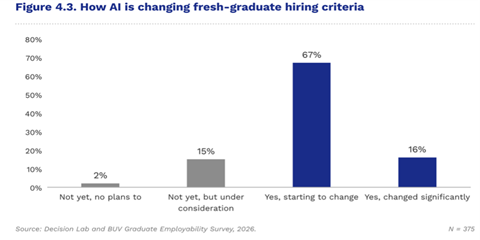
AI BEGINNING TO RESHAPE RECRUITMENT CRITERIA
Digital literacy is the only capability area in which fresh graduates meet employers’ expectations, according to a new report. Yet, it is also the standard rising fastest, as businesses increasingly expect new hires to use AI effectively in the workplace. Some 83 per cent of employers say AI has changed, or is beginning to change, their hiring criteria, while 94 per cent report higher expectations for digital and AI capabilities than they had two to three years ago.

INFRASTRUCTURE / CONSTRUCTION / LOGISTIC / PORT
ĐÀ NẴNG GREEN-LIGHTS US$105 MILLION THAI DEVELOPMENT DEAL
The central city has approved an investment proposal by Thailand’s WHA Group to develop infrastructure for the 400ha WHA Đà Nẵng Industrial Park project on two communes of Thăng Bình and Đồng Dương, with an investment of more than VNĐ2.7 trillion (US$105 million). The city said it approved WHA Industrial Development International's status as an investor in the project, which is expected to take place between 2027 and 2034.

VIETNAM ECONOMY INVESTMENT
MOBILE PHONE EXPORTS RISE 20% TO $51.8 BILLION IN FIRST NINE MONTHS
Exports of mobile phones and components rose 20 per cent year-on-year to nearly US$51.8 billion in the first nine months of 2026, with China, the US and Republic of Korea accounting for more than half of the total. Shipments to the three markets reached a combined $26.18 billion, or 50.6 per cent of total exports of the product group during the period, according to data from the Vietnam Department of Customs under the Ministry of Finance.

VIETNAM ECONOMY INVESTMENT
FRUIT AND VEGETABLE EXPORTS POISED TO HIT $10 BILLION IN 2026
Fruit and vegetable exports are on track to reach nearly US$10 billion in 2026, after rising 19.9 per cent year on year to nearly US$7.4 billion in the first nine months, driven by strong seasonal demand and abundant tropical fruit supplies. The Ministry of Agriculture and Environment said the growth reflected stronger international demand for fresh produce and processed agricultural products.
GARMENT / TEXTILE
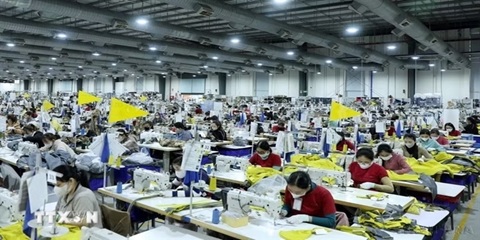
TEXTILE EXPORTS FACE DUAL CHALLENGES OF SUSTAINING ORDERS AND BOOSTING EFFICIENCY AMID GROWING COMPETITION
Data shows that the textile and garment sector maintained its growth momentum in the first nine months of this year. The industry's total export turnover reached an estimated US$35.721 billion in the first nine months of this year, up 3.3 per cent year-on-year. Despite posting encouraging export figures, Vietnamese textile and garment enterprises continue to navigate unpredictable market variables.
Events Sponsors






















